Imara Tv Q2 2025 Audience & Activity Report
By Team Imara

Imara Tv Q2 2025 Audience & Activity Report
Introduction
The following is a report of our social media audience reach for the period 1st April to 30th June 2025 from organic content post on all platforms:
| Social Media Platform | X/Twitter | Tiktok | Youtube | Total | ||
|---|---|---|---|---|---|---|
| Number of adolescents and youth, including those with disabilities, reached with information and services that promote their health and wellbeing at national level and in target counties (TOTAL) | 46,522 | 16,731 | 140,840 | 5,500 | 5,467 | 215,059 |
| Boys/Male | 30,425 | 10,590 | 97,320 | 2,252 | 140,588 | |
| Girls/Female | 16,097 | 6,140 | 41,688 | 3,214 | 67,139 | |
| Undeclared | - | 1,831 | - | 1,831 |
The following is a breakdown of all the audiences by demographic data such as age, gender and location except for Tiktok which does not provide age and gender of users.
Facebook Analytics
Total reach was 46,522 unique Facebook user accounts with 27,539 watching more than 3 seconds and 442 engaging with the content through likes, comments and shares. 5 most popular films are shown below:
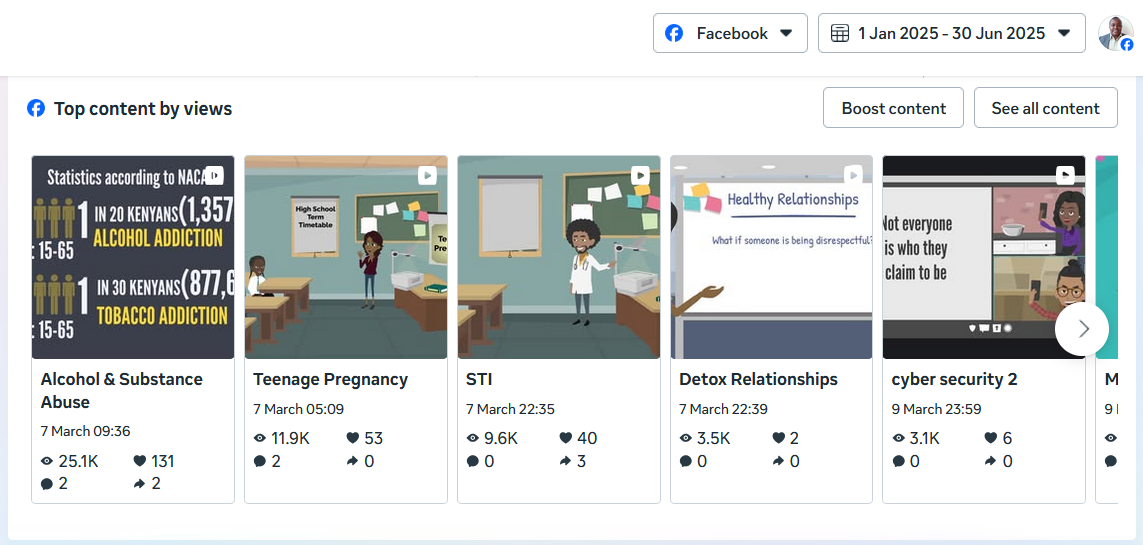
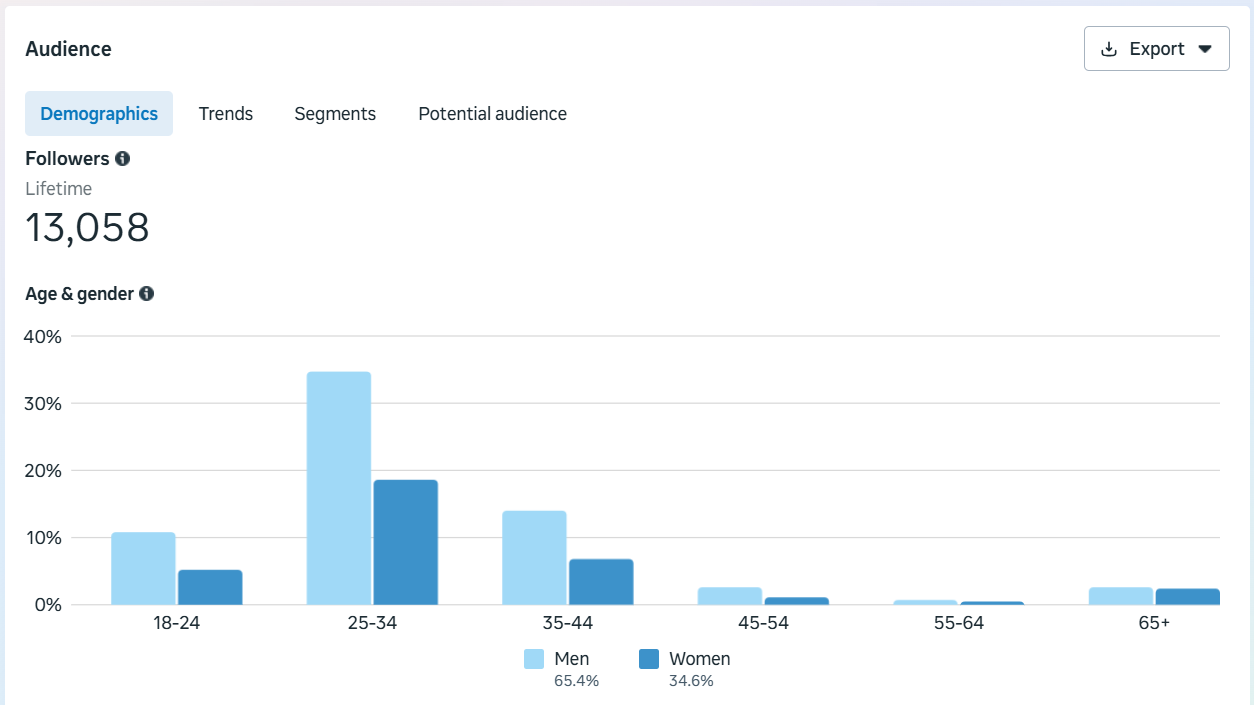
65.4% of our viewers were male with 34.6% women, mostly in the 25-34 age group as shown:
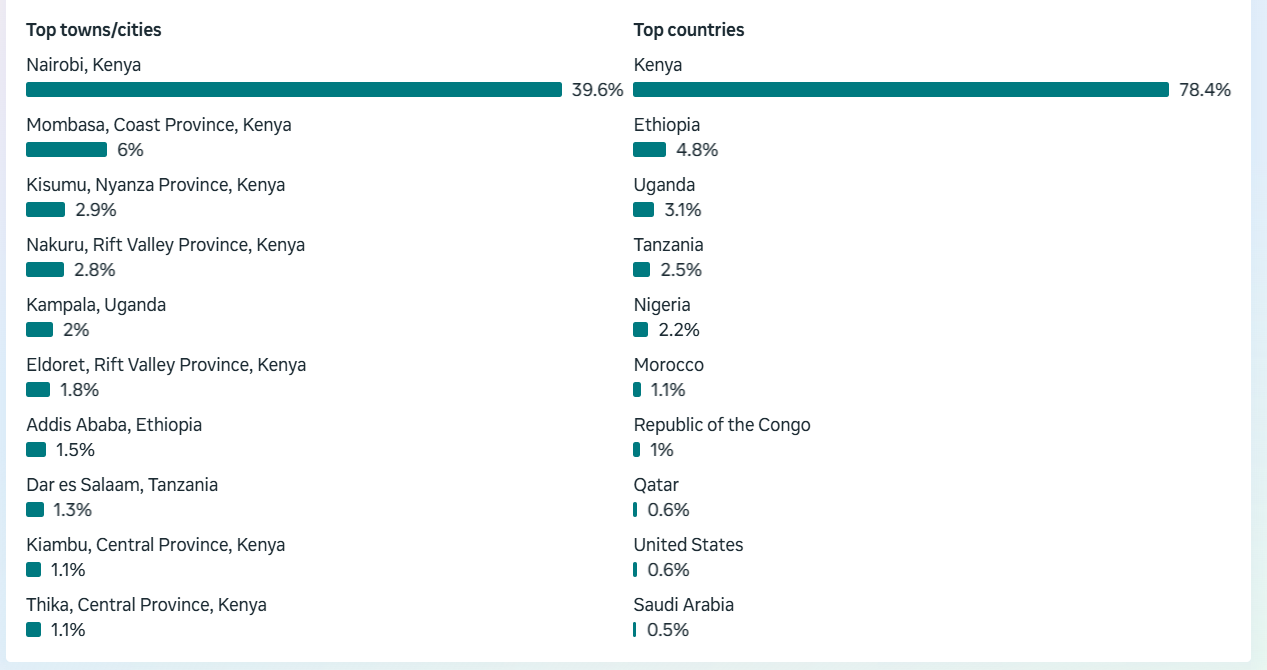
39.6% of viewers were in Nairobi and 78.4% were from Kenya. See more audience locations below:
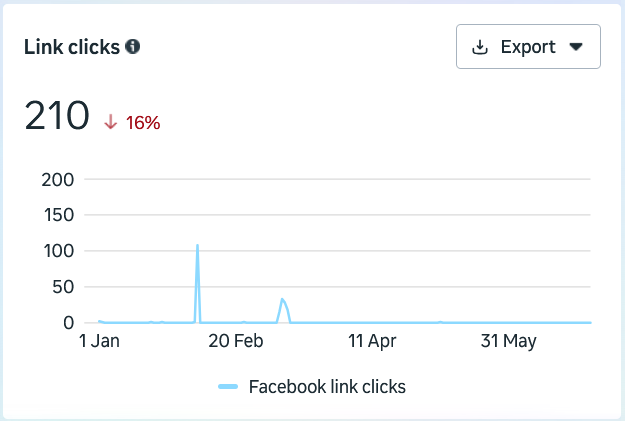
We also generated 210 link clicks by Facebook users to visit our sponsors website:
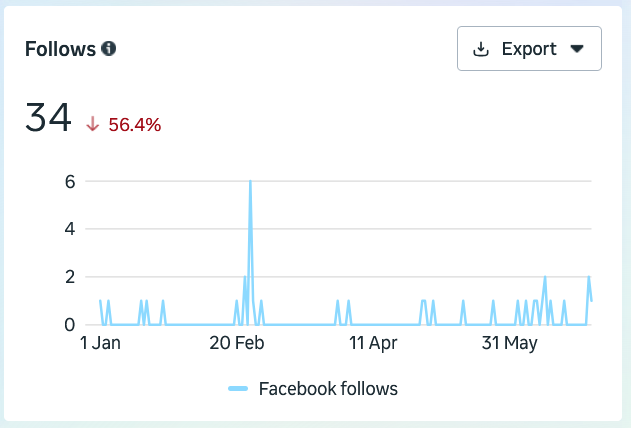
We got 34 new followers on our Facebook page from organic content reach:
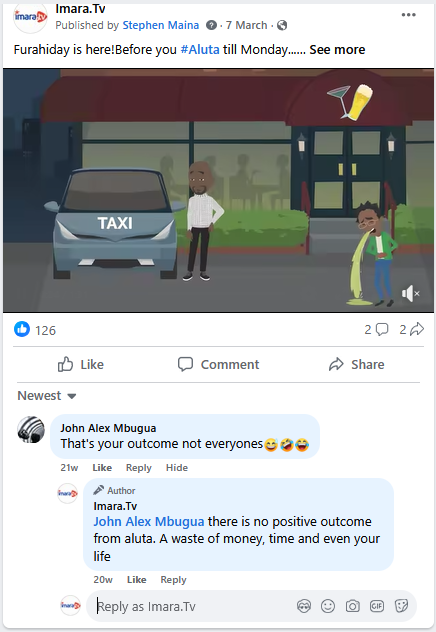
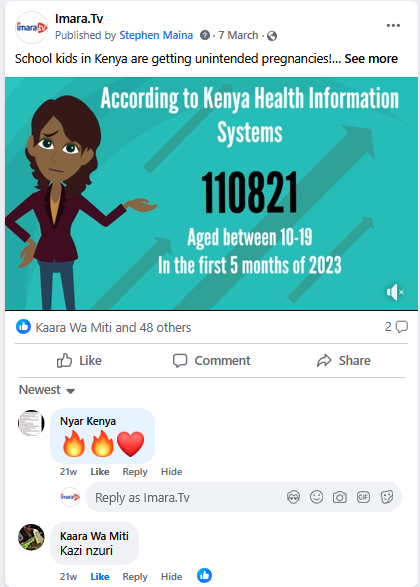
Sample comments from Facebook is shown below:
Instagram Analytics
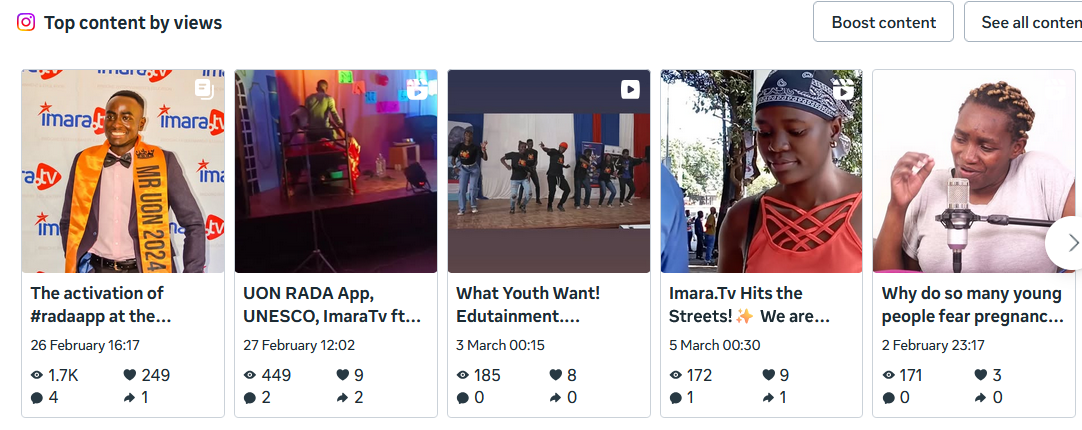
We registered a total of 16,731views on Instagram. Most popular content on Instagram was the following:
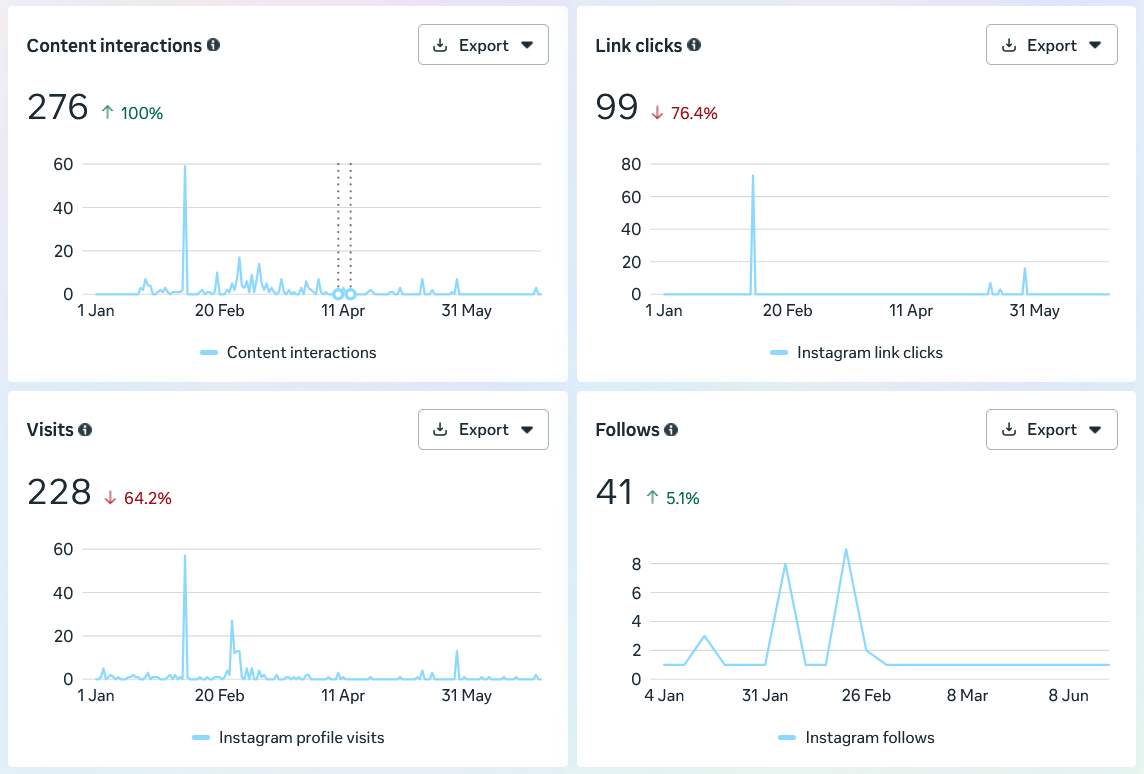
We got 276 unique interactions , 99 link clicks and 41 new followers:
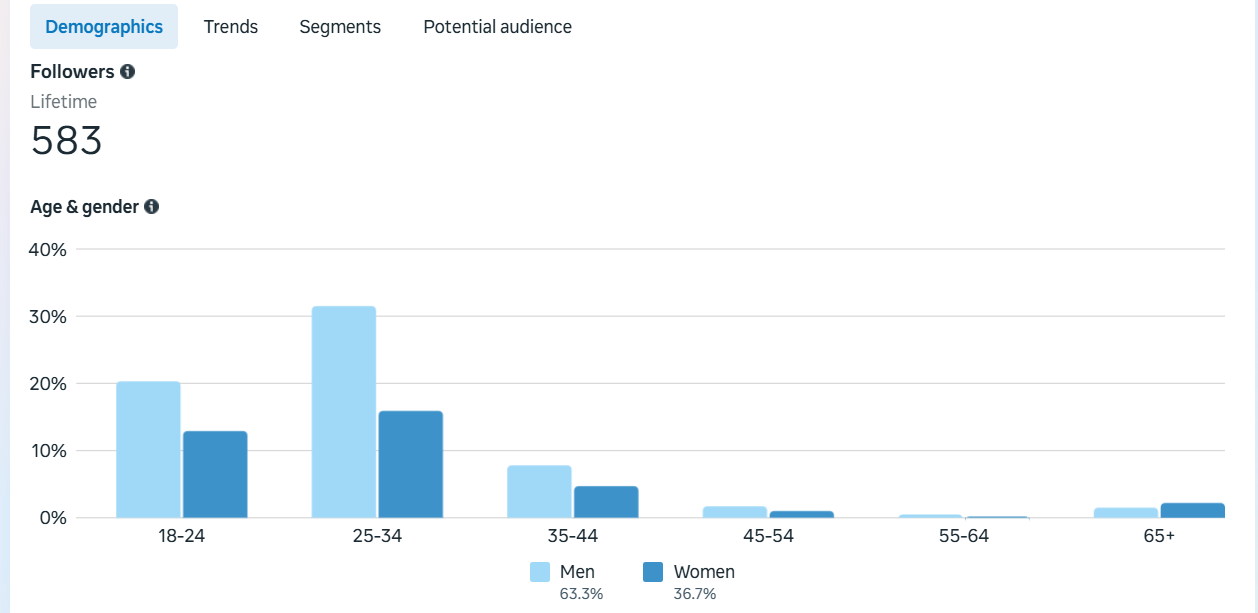
Men composed 63.3% of Instagram audience while women made up 36.7%:
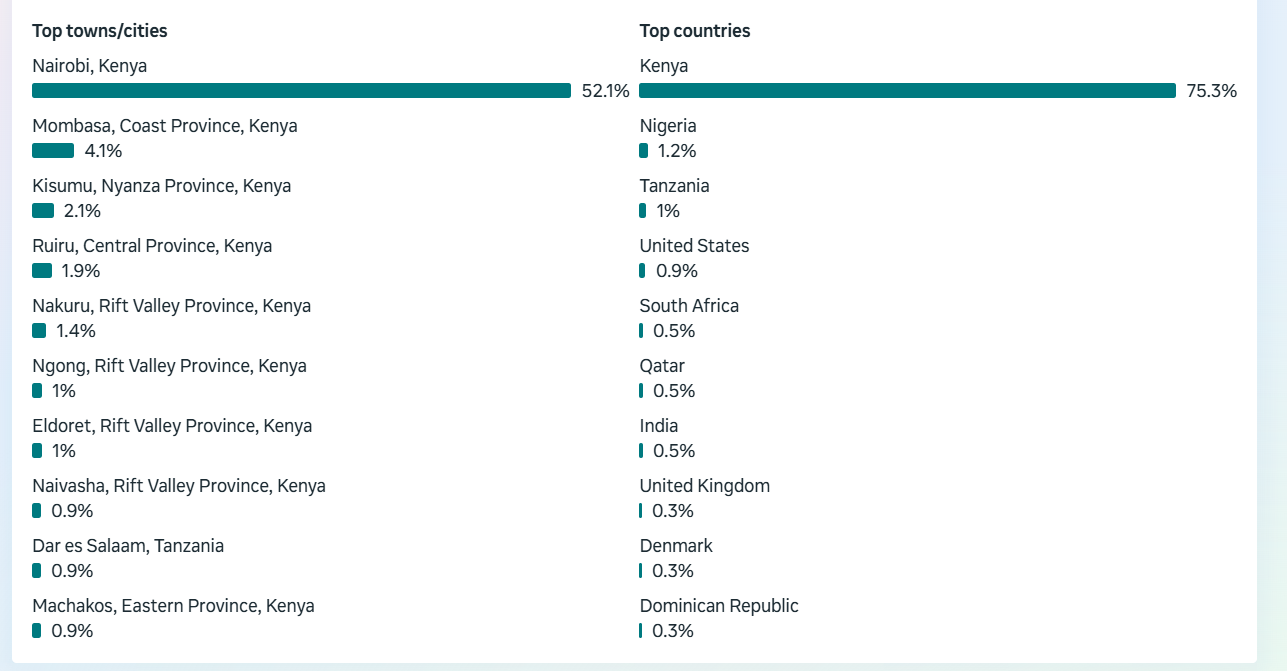
52.1% of our audience on Instagram is from Nairobi with 75.3% from Kenya:
X/Twitter Analytics
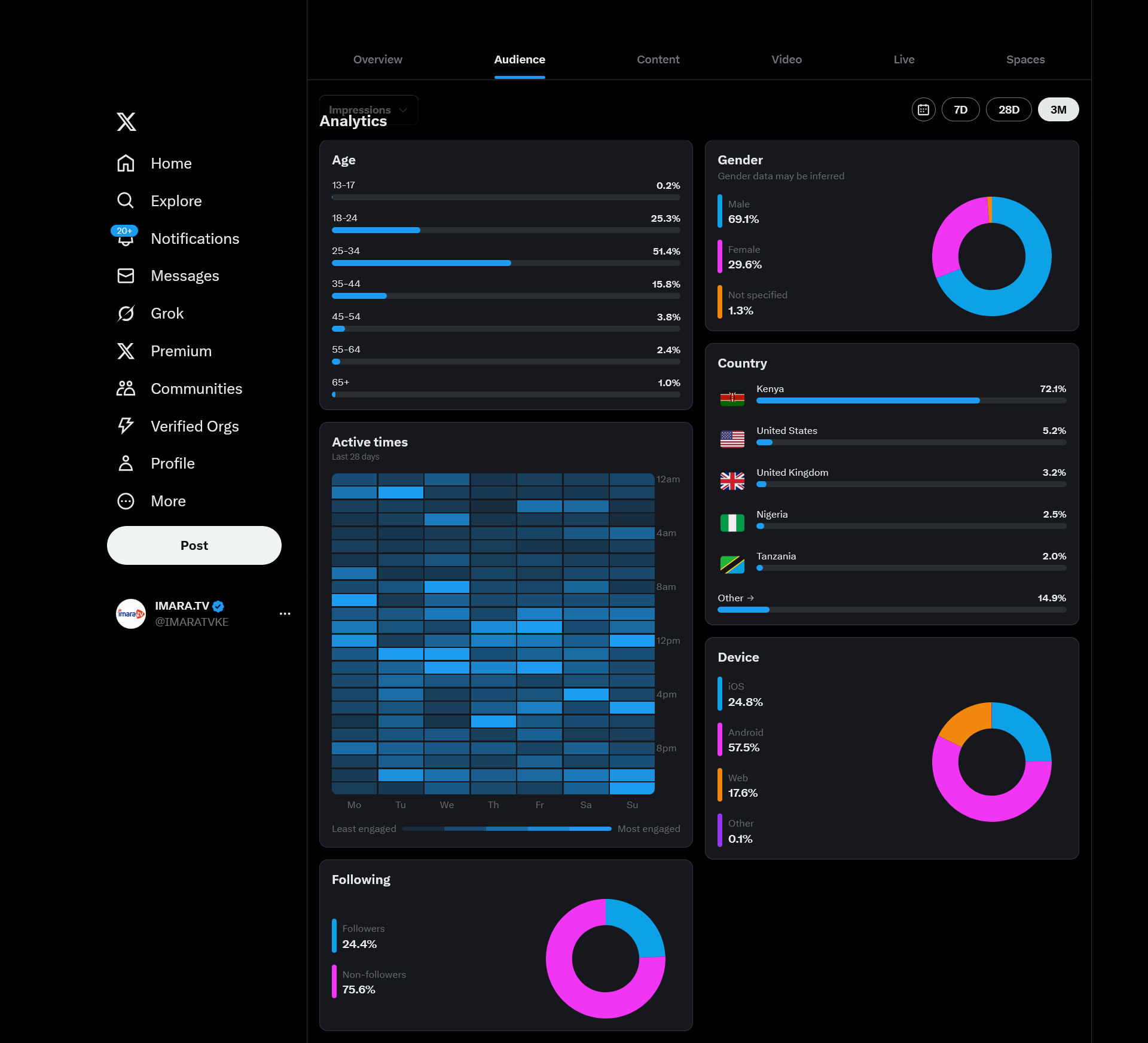
We got a total of 140,840 views on X/Twitter
Audience Engagement:
Age Demographics: The majority of impressions, spend, and video views come from the "21 and up" age group, followed by "25 to 34" and "18 to 24." This indicates a strong engagement from younger adult audiences.
Geographical Distribution: Nairobi leads in impressions, spend, and video views, suggesting a high level of engagement from this region. Other regions like Central, Rift Valley, and Coast also show significant engagement.
Interest-Based Insights:
Top Interests: The campaign has seen the highest engagement from audiences interested in "Business and finance," "Business software," and "Government," all of which received 674,111 impressions. Other interests like "Beer," "Cocktails and beer," "Liquor and spirits," "Wine," and "Foodie news and general info" also show strong engagement, each with 662,762 impressions.
Interest Correlation: The overlap in impressions across related interests (e.g., various types of alcoholic beverages) suggests a cohesive interest group that the campaign effectively reaches.
Video Engagement Metrics:
Video Starts vs. Completions: The campaign has seen 761,990 video starts, but only 5,378 video completions, indicating a significant drop-off rate as viewers progress through the video.
Quarterly Engagement: The engagement decreases at each quarter of the video, with 33,835 viewers reaching 25%, 12,240 reaching 50%, and 7,535 reaching 75% of the video length.
TikTok Analytics
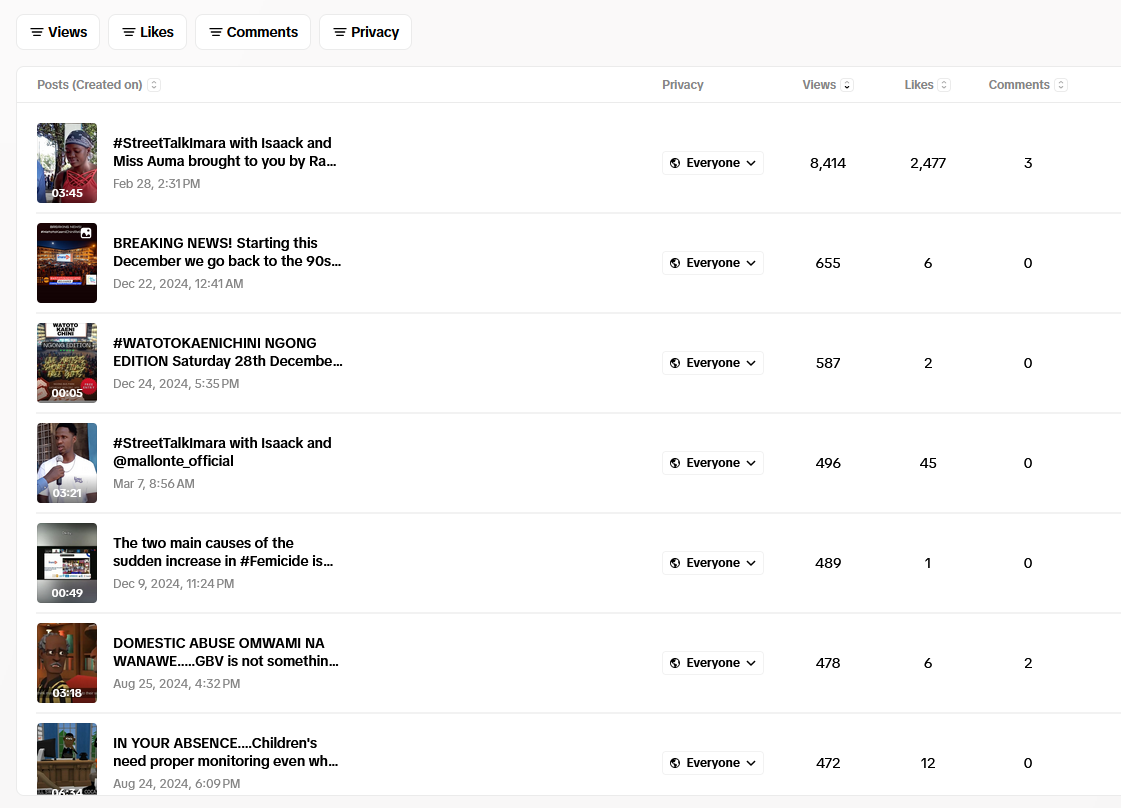
A total of 5,500 views were registered. Most popular content for the period is shown below:
Youtube Analytics
We got 5,467 video views on Youtube and 59 new channel subscribers. Demographic data is as shown below:
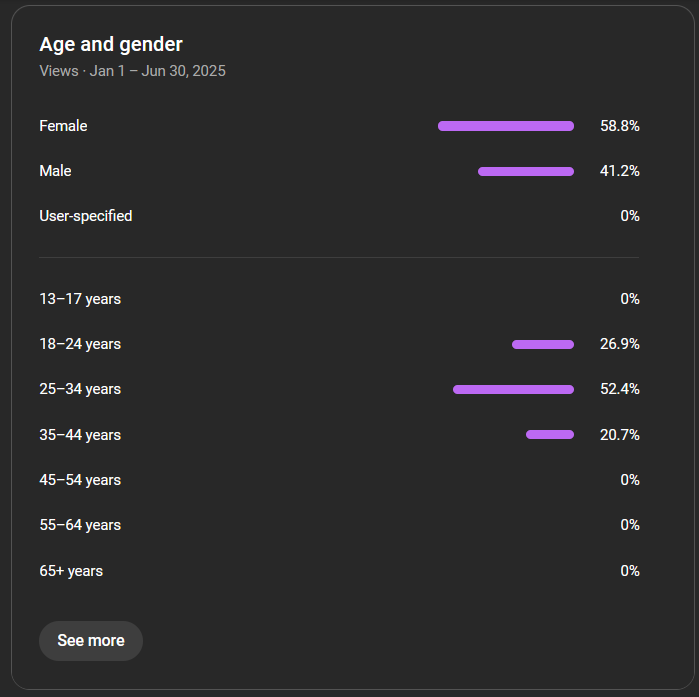
58.8% of our audience was female with 41.2% male.
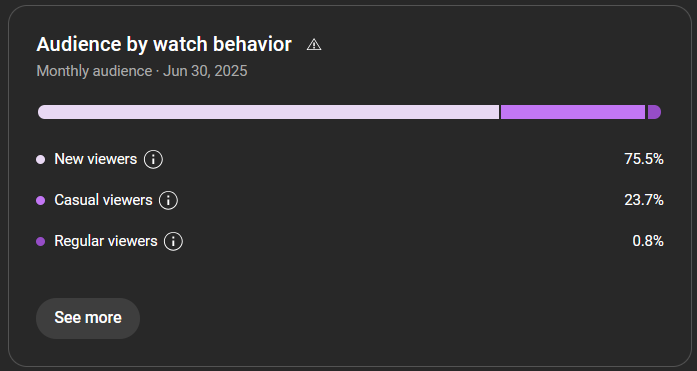
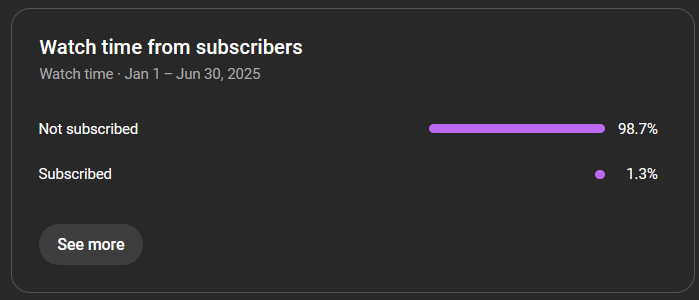
75.5% were first time viewers and 98.7% not subscribed to our
channel
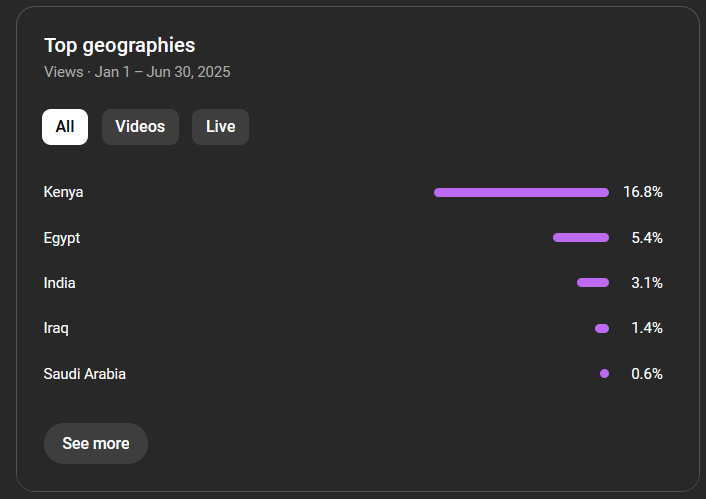
16.8% of our audience was from Kenya
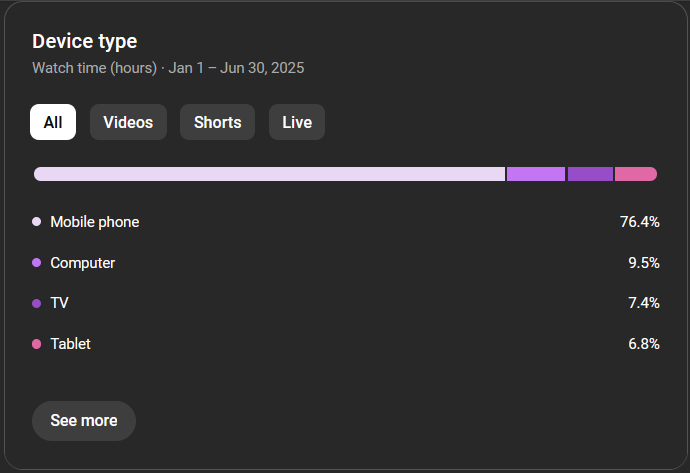
76.4% accessed our channel via a smartphone
Activities
On 11th July 2025, Imara Tv joined other like-minded organizations under the Digital Health Coalition of Kenya umbrella to launch the Rafiki Platform, a free collection of SRHR services and resources https://rafikey.vercel.app/
DHCK Rafikey – Development and launch of the RafiKey SRHR platform
Introduction Digital Health Coalition Kenya
The Digital Health Coalition Kenya (DHCK) is a coalition of stakeholders committed to enhancing the sexual and reproductive health and Rights (SRHR) of young people in Kenya by accelerating the digital transformation of SRHR information and services.
To do so most effectively, the DHCK offers a collaborative platform of key donors, implementers and other strategic partners working on adolescents and young people’s SRHR in Kenya. The DHCK aims to unite the current fragmented landscape and together work towards achieving Universal Health Coverage and SRHR for all young people in Kenya
Principles of the DHCK
Ecosystem approach: A holistic approach to young people’s SRHR and digital health
Principles for digital health: The DHCK anchors the design of all digital health solutions based on the Principles for Digital Development
Pleasure Based: An evidence bases approach - sex positive, youth friendly, please based approach is applied to all digital services.
Quality: Human centred design and bahavioural change communication methodologies fundamental to digital health to succeed
International standards: The DHCK anchors its vision on the WHO principles and strategy of digital health
Why we need the DHCK
Fragmentation: Donors and implementers develop digital health solutions in silo’s. Solutions often address only limited aspects of health while young people’s needs are diverse. A holistic approach is needed.
Pilotitus: New interventions are often developed in projects with funding for a set time. Many successful interventions, even though effective, thereafter cease to exist.
Shared vision and policy alignment: Joint strategizing and planning allows resources to be more efficiently and effectively allocated. Both the government of Kenya as well as the Africa CDC call for more collaboration and alignment of services. See: Africa CDC digital health strategy (Africa-CDC-DTS-Summary-for-CPHIA-3.pdf) and the Kenya guideline for self-care in reproductive health: selfcare guidelines-SN12signed-nt jan 09 2023.pdf - Google Drive and Impact-Story-Kenya.pdf (psi.org).
Collaboration: A collaborative approach enables a shared vision to be realised. By sharing ownership of digital services they are less dependent on short term project based funding and therewith their sustainability is enhanced.
DHCK’s shared initiative: RafiKey
In September 2023, the DHCK organised a co-creation workshop in which members and young people came together to create prototypes for a joint platform that would integrate as well as link to interventions of DHCK members. This led to the development of a new platform called RafiKey.
Background: Young Kenyan’s SRHR needs are insufficiently met
Within Kenya's burgeoning youth population lies a web of pressing challenges that impede their wellbeing and potential. Kenya’s population of young people grew from 3.2 million in 1989 to over 12 million in 2019 and is projected to increase to almost 19 million by 2035 (State of Kenya population report, 2023). Challenges they face include SRHR, mental health, gender-based violence (GBV), and economic empowerment. While DHCK members provide effective quality information and services to support young people with these challenges, not all their needs are met and there remains a task to do better and provide all young people with the information and services they need.
Access to comprehensive SRHR information
Too many young people lack comprehensive SRHR knowledge. Research published in 2019 found that less than 25% of the respondents received CSE training and more than half of them reported no sexuality education curriculum was used while almost half of the respondents mentioned that the personal values, biases and opinions of the educator were addressed (Mercelline A. Ogolla and Miriam Ondia: Assessment of the Implementation of Comprehensive Sexuality Education in Kenya, 2019). The majority of teachers emphasize abstinence as the best or only method to prevent pregnancy and STIs. Yet numerous studies have shown the abstinence-only programmes do not work.
Contraceptive uptake and use
Despite progress in access to modern contraceptives, erratic usage persists among adolescents, leading to a concerning prevalence of unwanted pregnancies. Almost half (47%) of the adolescent women 15-19 years old in Kenya have an unmet need for modern contraceptives (Kenya | Guttmacher Institute). A survey by Shujaar Inc found that while 85% of the young people had used some form of modern contraception only 72% did so the last time they had sex. This resulted into 12% of the girls between 15 and 19 years old getting pregnant in 2022 (Sex and Relationships (shujaazinc.com).
Social norms and misinformation further compound this issue, fueled by inadequate sex education that fails to equip young people with comprehensive knowledge and skills for informed decision-making. Shujaaz Inc nationally-representative survey 2022 found that while income level and education level have an impact on use of modern contraception by sexually active females the biggest impact has how many of her friend she think use modern contraception. When the norm is that most of all do so it’s very likely she will use contraception as well compared to very unlikely when she believes none of her friends do. Therefore norm change is crucial.
HIV related needs
While we see a positive trend of declining HIV infections, incidence remains relatively high among young people. With 7307 new infections among young people between the ages 15-24 old, the incidence is higher compared to older age groups. In 2023 there were 2225 AIDS related deaths among the same age group (National Syndemic Diseases Control Council, 2023). Reasons include limited knowledge on prevention, stigma discrimination and gender inequality as well as lack of access to prevention methods.
HIV related stigma and discrimination remain a major challenge in the response to HIV due to persistent negative attitudes towards people living with, at risk of and affected by. (HIV Stigma Index 2021: Kenya-SI-2.0-Report-2021.pdf (stigmaindex.org)). Fear of other people’s reaction in case they found out about HIV positivity results in delayed testing. Access to information and services through digital health interventions can enhance confidentiality and access to services. There’s a need as well for reporting mechanisms and support for people living with HIV who experience human rights abuses. With 270,000 young people living with HIV in Kenya between 15-29 years old there’s a need to make such mechanisms and support easy accessible to them.
Mental Health challenges
Kenya is facing a growing mental health crisis among young people. The Covid-19 pandemic affected young people’s mental health severely. Half of the young people in Kenya report to struggle with their mental health. They have feelings of depression or panic attacks (On the Horizon (shujaazinc.com)). Appart from the Covid-19 pandemic, mental health challenges are also caused by SRHR related issues such as having experienced Gender Based Violence (GBV) or other SRH events such as unplanned pregnancy or contracting HIV or an STI. At the same challenges affecting mental health, such as stigma and psychological distress, affect the use of contraceptives and can lead to not using HIV and STI prevention methods. There is therefore a need to integrate mental health and SRHR.
Sexual and Gender Based Violence
Many girls and young women experience sexual and gender based violence (SGBV). From the women between 15-49, 34% experienced physical violence and 13% sexual violence (DHS Kenya, 2022). There have been 500 cases of femicide since 2016 (Femicide Kenya (africadatahub.org)).
Economic challenges
While Kenya’s economy grows, costs rise faster. Research done by Shujaaz Inc shows that, already before the COVID pandemic, young people reported reducing average earnings while the costs for basic necessities like food and fuel increased (Income and Work (shujaazinc.com)). The research also shows that due to the increasing cost of living 100% of the young people have to earn money, compared to 47% in 2016, because they cannot rely on their parents anymore. Most of them (95%) find solutions to earn an income in the informal economy. Lack of economic means is one of the key challenges young people face and a challenge that hampers their SRHR. The DHCK therefore aims to integrate economic empowerment in the RafiKey SRHR platform.
The aim of the partnership: Providing young people easy (online) access to comprehensive SRHR information and services
The increasing access young people have to the internet provides an opportunity to reach young people with the information and services they need. Shujaaz Inc research in 2022 found that 7 in 10 young people own a phone and that 5 of these is a smartphone. The ownership of a smartphone therewith doubled since 2018 (On the Horizon (shujaazinc.com)). Many young people therewith said to find their information online however, it needs to be taken into account that smartphone ownership is higher among urban populations compared to rural and among boys compared to girls.
To respond to the increased access young people have to the internet DHCK members have developed a wide range of online SRHR interventions. While each single of these interventions have proven to successfully support young people on their SRHR needs there's an opportunity to further improve the effectiveness of SRHR information and service provision.
With the wide variety of online interventions for young people, it has become challenging for them to keep track of all the information and services available, to know which are reliable and to navigate to the information and service they need. At the same time service providers face funding challenges, with project based interventions often only receiving funding for a set time and organisations competing for the same funding. Additionally, interventions do often not address the full diverse needs of young people.
The DHCK has therefore co-created RafiKey together with young people. RafiKey is a platform that integrates the information and services developed by DHCK members or link to these. By accessing RafiKey, young people can find access to all information and services to address their diverse SRHR needs.
Hosting of RafiKey
See options under Annex I.
Governance structure
Steering Committee - In the RafiKey co-creation September 2023 a DHCK steering committee (SC) was proposed in which all member organisations have one vote. Non-Kenyan members could be members of the SC without voting rights. The role of the SC is to…
Technical Team - In a meeting held by the co-creation workshop committee (members: Amref, Imara TV, Aidsfonds, LVCT Health and PS Kenya) on 13-2-2024 the need for a Technical Team (TT) was identified. This team needs to include software engineers from multiple member organizations. Steve (Imara TV) is willing to lead this team and LVCT Health and PS Kenya suggested team members. The role of the TT is to enhance the existing features of Rafikey, working in collaboration with the content team.
Content Committee - A content committee (CC) is proposed which will work closely with the TT. This committee compiles content that has been developed by the different DHCK members and jointly develop content to be used for RafiKey and by the individual DHCK members. The CC creates an opportunity for DHCK members to develop content together and enhance efficiency and comprehensiveness. The CC will work closely together with the TT who will assist in uploading and integrating the content on RafiKey. Content is also developed for social media and can include audio (podcast) and visual content. Dennis (LVCT) offered to lead the CC.
Youth Leadership Hub - Equip the DHCK with insights on youths’ realities and needs, with a focus on key moments in the Digital Health youth SRHR program lifecycle.
Resource Mobilisation Committee -
Secretariat and coordination- This depends on hosting of RafiKey (Annex I). Previously a job description for a DHCK coordinator has been developed (Annex II).
Role DHCK secretariat compared to members:
- Manages data (data breach)
- Don’t have tech expertise but coordinate
- Coordinate content upload
- Share data with gov
- Manage social media but partners create content
- Also important: data collection/research to proof concept. Fundraising for sustainability.
- Funding of it: grant
- Long term:
o Government: when integrated in national healthcare structure. After we have proved te concept.
o Public/private partnership: advertise in Rafikey.
o Consortium: partners allocate budget.
System for collaboration and file sharing - ?
LVCT will explore legal options for intellectual property, ensuring alignment with DHCK's unregistered status and DHCK main objective.
Digital Health Coalition Kenya membership
What’s in it for me?
Impact: Together the DHCK will reach more young people and can offer a more diverse set of information and services. The problem, as described in the background, is too complex to be solved by a single organisation. DHCK members feel a shared responsibility to make sure that young people have easy access to all services of their diverse SRHR related needs.
Scale: By linking and integrating your solutions in a broader digital health ecosystem DHCK members are able to scale their solution more efficiently and effectively.
Sustainability: Solutions have more chance to be sustainable when integrated in a broader digital health ecosystem. Services are less dependent on one funding source.
Cost-effectiveness: By deploying a digital solution in a broader digital health ecosystem certain costs and efforts are shared while effectiveness is enhanced.
Voice: By joining forces DHCK members have a stronger voice towards donors, ministries, counties and other key stakeholders.